BMI Calculator: How to Calculate Your BMI and Understand the Result
Calculate your Body Mass Index (BMI) using your height and weight. Learn the BMI formula, understand common BMI categories, see how BMI is calculated, and discover the limitations of using BMI as a measure of health.
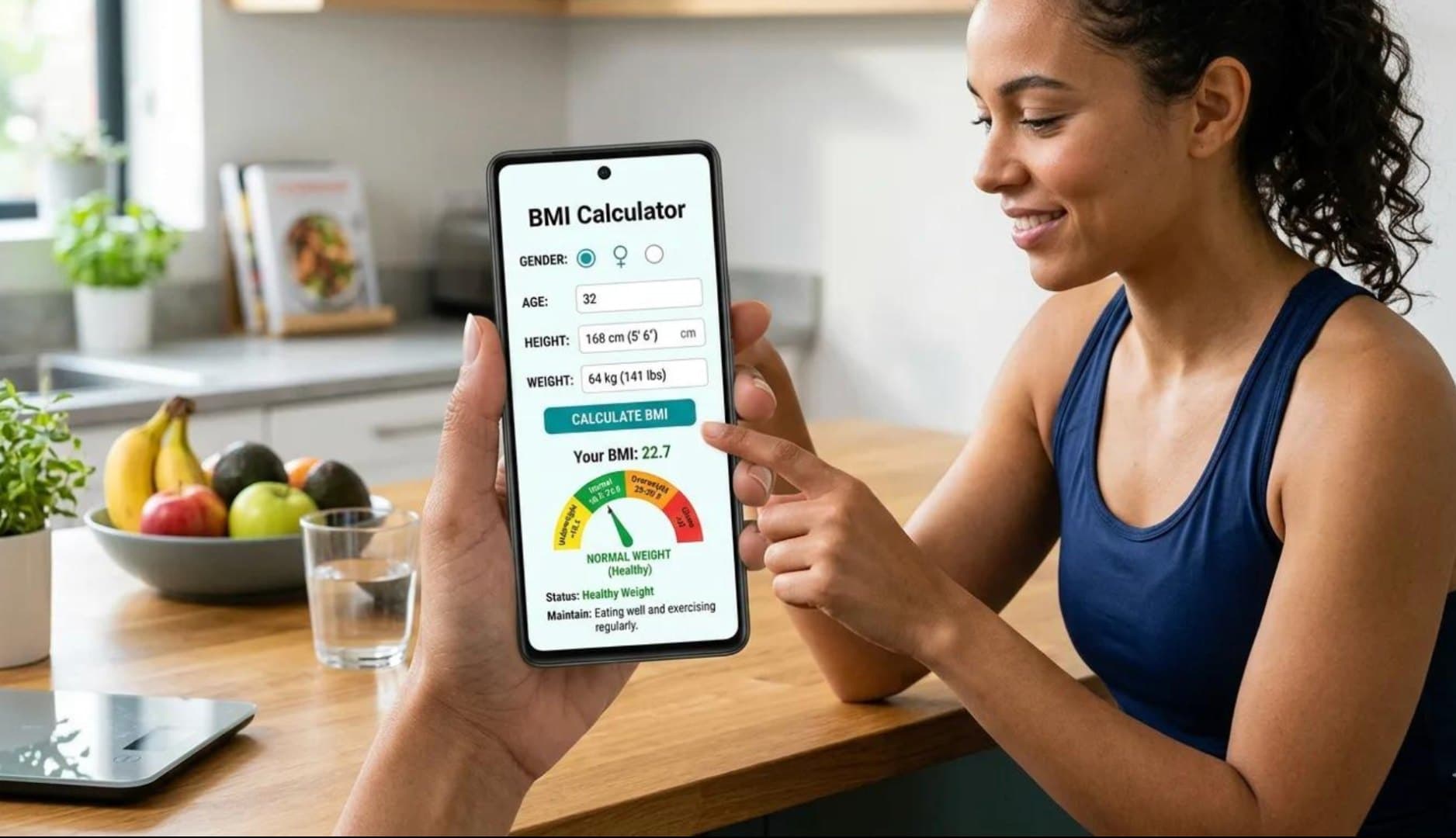
How much should you weigh for your height?
It's a common question, but there isn't one simple number that works for everyone.
One commonly used screening measurement is Body Mass Index, better known as BMI. BMI uses your height and weight to produce a number that can help categorize weight status for adults.
You don't need to calculate it manually every time. A BMI calculator can calculate your result in seconds after you enter your height and weight.
In this guide, we'll explain what BMI means, how to calculate it, how the BMI formula works, what the common adult BMI categories are, and why BMI should be treated as a screening measure rather than a complete picture of someone's health.
What Is BMI?
BMI stands for Body Mass Index.
It is a numerical value calculated using a person's weight and height.
The basic idea is simple:
BMI = weight relative to height
BMI is commonly used as a screening measure for adults because it provides a quick way to categorize weight status at a population and individual level.
However, BMI does not directly measure body fat.
It also doesn't tell you everything about your health, fitness, diet, or body composition.
That's important when interpreting your result.
How Is BMI Calculated?
For adults using kilograms and meters, the standard BMI formula is:
BMI = weight (kg) ÷ height² (m²)
For example, imagine an adult who weighs 70 kg and is 1.75 meters tall.
The calculation is:
70 ÷ (1.75 × 1.75)
70 ÷ 3.0625 = 22.86
The BMI is approximately:
22.9
You can perform this calculation manually, but an online BMI calculator makes it much faster.
BMI Categories for Adults
For adults, BMI is commonly grouped into four broad categories:
BMI | Category |
|---|---|
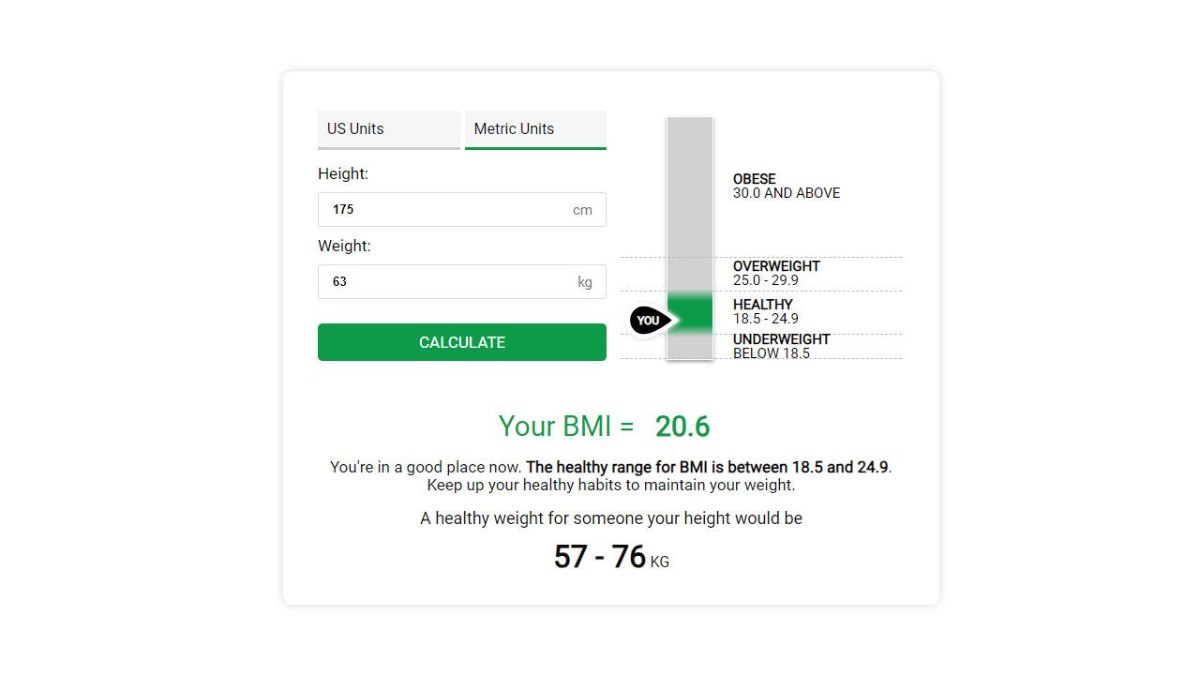
Below 18.5 | Underweight |
18.5 to 24.9 | Healthy weight |
25.0 to 29.9 | Overweight |
30.0 or higher | Obesity |
These categories are commonly used for adults, but they should not be interpreted as a diagnosis.
A BMI result is one measurement among many factors that can be considered when evaluating health.
What Does Your BMI Number Mean?
Your BMI gives you a number based on your height and weight.
For example:
A BMI of 17 may fall into the underweight category.
A BMI of 22 may fall into the healthy-weight category.
A BMI of 27 may fall into the overweight category.
A BMI of 32 may fall into the obesity category.
But the number shouldn't be viewed in isolation.
Two people can have the same BMI while having very different amounts of muscle, fat, and other body composition characteristics.
This is one of the most important things to understand when using a BMI calculator.
Why Use a BMI Calculator?
Calculating BMI manually is relatively simple, but an online calculator is more convenient.
A BMI calculator online can help you:
Calculate BMI quickly
Avoid arithmetic mistakes
Convert height and weight into the required units
Check your BMI when tracking fitness goals
Understand which broad BMI category your result falls into
For occasional calculations, entering your information into a calculator is usually much easier than remembering the formula.
BMI Calculator Using Kilograms and Centimeters
If your weight is measured in kilograms and your height is measured in centimeters, you need to convert your height to meters before using the standard metric formula.
For example:
Height = 175 cm
Convert it to meters:
175 ÷ 100 = 1.75 m
Then use:
BMI = weight ÷ height²
So if your weight is 70 kg:
BMI = 70 ÷ (1.75²)
BMI ≈ 22.9
A calculator can handle these conversions for you.
BMI Calculator Using Pounds and Inches
BMI can also be calculated using pounds and inches.
The commonly used formula is:
BMI = 703 × weight (lb) ÷ height² (in)
For example, someone weighing 154 pounds and measuring 69 inches tall could use this formula to calculate their BMI.
If you normally use pounds and feet/inches, an online BMI calculator can be more convenient because you don't have to manually convert your measurements.
What Can Affect Your BMI?
BMI is calculated using only two measurements:
Height + Weight
But your body is much more complicated than those two numbers.
Factors that can influence how meaningful a BMI result is include:
Muscle mass
Age
Sex
Body composition
Distribution of body fat
Pregnancy
Overall fitness
Certain medical conditions
For this reason, BMI should be interpreted in context.
BMI and Muscle Mass
Muscle is denser than fat.
Someone who has significant muscle mass can have a relatively high body weight for their height without having the same body-fat level as someone with less muscle.
This means BMI can sometimes classify muscular people into a higher category even when their body composition is different from what the BMI category might suggest.
This is particularly relevant for athletes and people who participate in strength training.
BMI and Age
BMI interpretation can differ depending on age.
For adults, standard BMI categories are generally used regardless of age, although health risks and body composition can change as people get older.
For children and teenagers, BMI is interpreted differently.
A child's BMI is generally assessed using age- and sex-specific growth references, rather than simply applying adult BMI categories.
Therefore, an adult BMI calculator should not be used to interpret a child's or teenager's health status.
BMI During Pregnancy
BMI is also not interpreted in the same way during pregnancy.
Pregnancy naturally involves changes in body weight and composition, so standard adult BMI categories are not designed to assess pregnancy weight status.
If you are pregnant or planning a pregnancy, use guidance from a qualified healthcare professional rather than relying on a standard BMI result.
BMI Is a Screening Tool, Not a Diagnosis
This is one of the most important points about BMI.
A BMI number does not diagnose a health condition.
It is a screening measurement that can help identify potential weight-related health risks when considered alongside other information.
A healthcare professional may consider additional factors such as:
Blood pressure
Blood glucose
Cholesterol
Waist circumference
Physical activity
Diet
Medical history
Family history
Body composition
Therefore, a BMI result should be viewed as one piece of information rather than a complete assessment of your health.
Limitations of BMI
BMI is useful because it is simple.
But that simplicity is also its biggest limitation.
It Doesn't Measure Body Fat Directly
BMI uses height and weight.
It doesn't directly measure how much of your weight comes from fat versus muscle.
It Doesn't Show Where Fat Is Stored
The location of body fat can matter for health, but BMI doesn't tell you where fat is distributed.
It Can Be Misleading for Muscular People
People with high muscle mass may have a higher BMI because muscle contributes to body weight.
It Doesn't Provide a Complete Health Assessment
A person can have a BMI within a particular category while having other important health factors that BMI doesn't capture.
That's why BMI should be used as a screening measurement rather than a standalone health verdict.
BMI vs Body Fat Percentage
BMI and body-fat percentage are different measurements.
BMI uses height and weight.
Body-fat percentage estimates how much of your total body weight consists of fat.
For example, two people could have the same BMI but different body-fat percentages because their muscle and fat composition differs.
Body-fat percentage can therefore provide additional information, although measuring it accurately can also be more complicated.
How Often Should You Calculate Your BMI?
There isn't a universal need to calculate BMI every day.
For people using BMI as part of general health or fitness tracking, occasional measurements may be more useful than repeatedly checking the number.
Your weight can naturally fluctuate from day to day because of factors such as:
Water retention
Food intake
Hydration
Exercise
Time of day
If you're tracking changes, using consistent measurement conditions can make comparisons more meaningful.
How to Get a More Useful Picture of Health
BMI is only one measurement.
If you're interested in your overall health or fitness, you can consider a broader set of indicators.
Depending on your goals, these may include:
Waist measurement
Strength
Cardiovascular fitness
Physical activity
Sleep
Nutrition
Blood pressure
Blood tests when medically appropriate
Body composition
The right measurements depend on the individual and the reason you're tracking them.
How to Use Synctoolo's BMI Calculator
If you simply want to calculate your BMI, there's no need to work through the formula manually.
👉 Open the Synctoolo BMI Calculator, enter your height and weight, and calculate your BMI.
The result gives you a quick starting point for understanding where your BMI falls within the standard adult categories.
Remember that BMI is a screening measurement, not a diagnosis.
If you're concerned about your weight, health, or a BMI result, a qualified healthcare professional can help interpret it in the context of your individual circumstances.
Frequently Asked Questions
What is a BMI calculator?
A BMI calculator is an online tool that calculates Body Mass Index using your height and weight.
How do I calculate my BMI?
For adults using metric units, divide your weight in kilograms by your height in meters squared.
BMI = weight (kg) ÷ height² (m²)
What is a healthy BMI?
For adults, a BMI from 18.5 to 24.9 is commonly categorized as healthy weight. BMI is only a screening measure and does not provide a complete assessment of health.
Is a BMI of 25 overweight?
Under standard adult BMI categories, a BMI from 25.0 to 29.9 falls into the overweight category.
Is BMI the same as body fat percentage?
No. BMI is calculated from height and weight, while body-fat percentage estimates the proportion of your body weight that is fat.
Can athletes have a high BMI?
Yes. People with substantial muscle mass can have a higher BMI because muscle contributes to body weight. BMI does not directly measure body composition.
Is BMI different for children?
Yes. BMI is interpreted differently for children and teenagers and is generally assessed using age- and sex-specific growth references.
Can I use a BMI calculator during pregnancy?
Standard BMI categories aren't designed to assess weight status during pregnancy. Pregnancy-related weight guidance should come from a qualified healthcare professional.
Does BMI tell me if I'm healthy?
Not by itself. BMI is a screening measurement and does not capture every factor that contributes to health.
Final Thoughts
A BMI calculator is a simple way to calculate Body Mass Index using two basic measurements: height and weight.
It's useful for getting a quick reference point and understanding standard adult BMI categories.
But remember that BMI is not a complete measure of health.
Muscle mass, body composition, age, pregnancy, and many other factors can affect how meaningful a BMI number is.
Use your BMI result as one piece of information rather than a final judgment about your health.
If you want a quick calculation, try the Synctoolo BMI Calculator and get your BMI in seconds.
Tools mentioned in this article
FAQ
How is BMI calculated?+
BMI is calculated by dividing your weight in kilograms by your height in meters squared (kg/m²), or in imperial units by multiplying weight in pounds by 703 and dividing by height in inches squared.
What is considered a healthy BMI range?+
According to World Health Organization (WHO) guidelines, a healthy BMI for adults is between 18.5 and 24.9. Under 18.5 is considered underweight, 25.0 to 29.9 is overweight, and 30.0 or higher is classified as obesity.
Is BMI accurate for athletes with high muscle mass?+
BMI measures total body mass relative to height, not body composition. Muscular athletes may register in the overweight category despite having low body fat, making waist circumference and body fat percentage useful complementary metrics.
We build and review free, privacy-first tools at Synctoolo.
Keep reading

Explore calendar math and astronomical timekeeping. Discover the 400-year Gregorian leap year rule, atomic clock leap seconds, and age calculations.

Avoid missing international meetings during Daylight Saving Time. Learn why US and European clock changes desynchronize and how to schedule recurring calls safely.