How to Calculate Reverse Percentage: Original Price Before Discount, Sales Tax, and VAT Formulas
Calculate original values before discounts or sales taxes. Master the simple division formula to find pre-discount prices and reverse VAT in seconds.
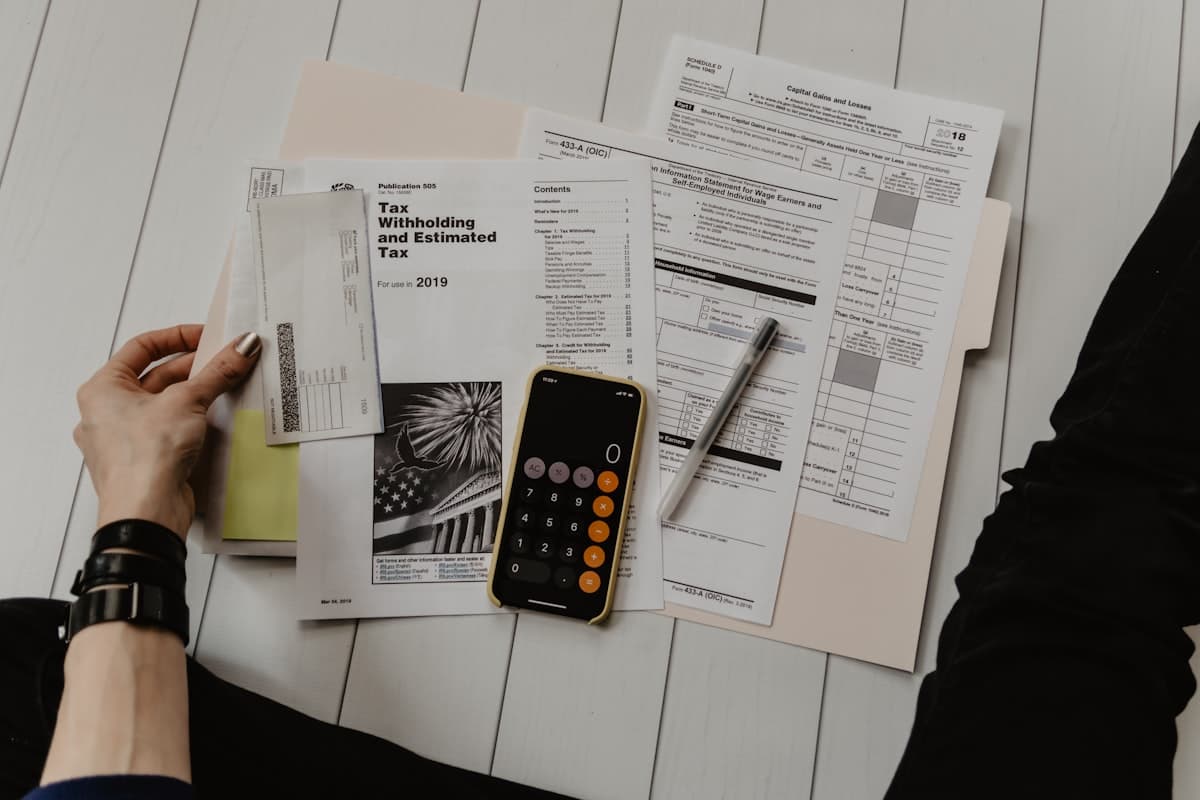
You find an item on sale for $80 after a 20% discount. What was the original price before the sale?
Most people immediately calculate 20% of $80 ($16) and add it to $80, concluding the original price was $96. This calculation is mathematically wrong. If an item was originally $96, a 20% discount ($19.20) would drop the price to $76.80, not $80.
This common math error happens because percentage increases and percentage decreases operate on completely different base numbers. Finding the true original value before a discount, sales tax, or value-added tax (VAT) requires reverse percentage division. You can calculate price changes, percentages of totals, and discounts instantly using Synctoolo's free Percentage Calculator.
Why You Cannot Simply Add the Percentage Back
When an item is discounted by 20%, the discount is calculated against the original, higher price. The discounted price represents the remaining 80% of that original amount.
When you attempt to "undo" the discount by taking 20% of the sale price, you are taking 20% of a smaller number. A smaller base always produces a smaller dollar amount, leaving you short of the true original value.
| Scenario | Sale Price | Incorrect Addition (+20%) | True Original Price (Correct) |
|---|---|---|---|
| 20% Off Sale | $80.00 | $96.00 (Flawed) | $100.00 ($100 - 20% = $80) |
| 30% Off Sale | $140.00 | $182.00 (Flawed) | $200.00 ($200 - 30% = $140) |
| 50% Off Sale | $50.00 | $75.00 (Flawed) | $100.00 ($100 - 50% = $50) |

The 2 Core Reverse Percentage Formulas
1. Reverse Discount Formula (Original Price Before Reduction)
To find the original price before a discount was subtracted, divide the final sale price by (1 - Discount Rate):
Original Price = Sale Price / (1 - (Discount% / 100))Example: You bought a laptop for $840 after a 30% discount.
1. Convert 30% to a decimal: 0.30
2. Subtract from 1: 1 - 0.30 = 0.70
3. Divide final price: $840 / 0.70 = $1,200.00
The original price was exactly $1,200.
2. Reverse Tax / VAT Formula (Pre-Tax Price Before Markup)
If you have a receipt with a final total that includes a sales tax or Value-Added Tax (VAT), divide the total by (1 + Tax Rate):
Pre-Tax Price = Final Total / (1 + (Tax% / 100))Example: An invoice totals $240 including a 20% VAT rate.
1. Convert 20% to a decimal: 0.20
2. Add to 1: 1 + 0.20 = 1.20
3. Divide final total: $240 / 1.20 = $200.00
The original pre-tax expense was $200, and the exact VAT paid was $40 ($240 - $200).
Reverse Percentage Quick Reference Multipliers
Keep these decimal divisors handy for instant calculations on any standard pocket or mobile calculator:
| Percentage Rate | Discount Divisor (Divide Sale Price By) | Tax / Markup Divisor (Divide Gross Total By) |
|---|---|---|
| 5% | Divide by 0.95 |
Divide by 1.05 |
| 10% | Divide by 0.90 |
Divide by 1.10 |
| 15% | Divide by 0.85 |
Divide by 1.15 |
| 20% | Divide by 0.80 |
Divide by 1.20 |
| 25% | Divide by 0.75 |
Divide by 1.25 |
| 40% | Divide by 0.60 |
Divide by 1.40 |
| 50% | Divide by 0.50 |
Divide by 1.50 |
Tools mentioned in this article
FAQ
Why is dividing by 0.8 the same as finding the original price after a 20% discount?+
When a price is reduced by 20%, you are paying for the remaining 80% of the original cost (100% - 20% = 80%). Since 80% is 0.80 in decimal form, the relationship is: Sale Price = Original Price * 0.80. Rearranging algebraically gives: Original Price = Sale Price / 0.80.
How do I calculate the sales tax amount from a receipt total?+
To find the tax amount included in a gross total, first calculate the pre-tax base by dividing the total by (1 + tax rate). Then, subtract that pre-tax base from the gross total. For example, with a $110 total and 10% tax: $110 / 1.10 = $100 base, meaning the sales tax is $10.
What is the difference between markup and reverse percentage?+
Markup calculates profit as a percentage of the initial cost (e.g. Cost $50 + 50% markup = $75 sale price). Reverse percentage works backwards from the final sale price to determine what the cost or original price was before an adjustment took place.
Can I use reverse percentage for salary and pay rise calculations?+
Yes. If your current salary is $66,000 following a 10% raise, divide $66,000 by 1.10 to find your previous salary: $60,000. Your pay increase was $6,000, not 10% of $66,000.
We build and review free, privacy-first tools at Synctoolo.
Keep reading

Explore calendar math and astronomical timekeeping. Discover the 400-year Gregorian leap year rule, atomic clock leap seconds, and age calculations.
Avoid missing international meetings during Daylight Saving Time. Learn why US and European clock changes desynchronize and how to schedule recurring calls safely.